

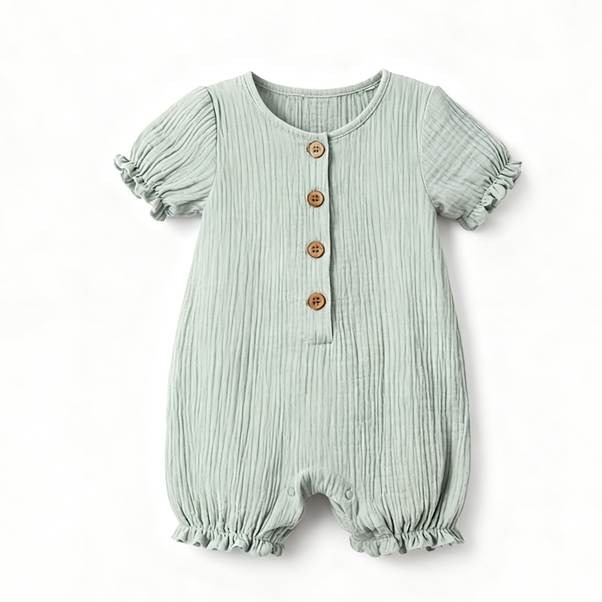
Short little rompers are a practical and comfortable choice for infants, designed with short sleeves and legs to provide ventilation and ease of movement in warm weather. Their one-piece style simplifies dressing and diaper changes, while stretchy, breathable fabrics like cotton prevent irritation and overheating. These rompers offer more leg coverage than onesies, making them ideal for active babies who are crawling or standing. With features like snap closures, tagless labels, and durable construction, they support both functionality and longevity. Additionally, sustainable materials and safety standards ensure these rompers are eco-friendly and safe for babies.
How Does Fabric Choice Affect Baby Comfort?
Breathable cotton blends reduce skin irritation and overheating, while flexible fibers support active growth
An infant’s comfort relies heavily on the fabric chosen. Soft, ventilated cotton or combinations with cotton minimize surplus warmth and skin irritations. These represent major concerns in children’s apparel. The materials absorb dampness. Simultaneously, they provide a gentle feel against delicate skin.
Elastic fabrics hold significant importance. Babies grow rapidly. Flexible textiles adapt to such shifts. This extends the life of each piece. Certain producers incorporate OEKO-TEX certified components. This verification ensures absence of harmful substances. It demonstrates that the material remains suitable for young children.
If seeking a garment crafted around these principles, this Organic Cotton Baby Romper illustrates ventilated ease. It incorporates OEKO-TEX approved elements. The form aligns well with everyday requirements.
How Do Short Rompers Compare to Other Growsuits?
Short rompers offer partial leg coverage and ventilation advantages over onesies or full-length styles
Examining options such as onesies, extended growsuits, or short rompers highlights primary variations. This aids in selecting items that match the climate or developmental level. Onesies primarily cling to the torso and secure at the base. They function effectively under additional layers. However, they prove unsuitable for cooler areas or outdoor sessions. Extended growsuits enclose arms and legs entirely. They serve chilly weather most effectively.
Short rompers occupy a unique niche. They permit improved breathing compared to complete suits. Nevertheless, they provide greater leg protection than onesies. Thus, they work well for children beginning to crawl or balance. The design corresponds to seasonal changes. It also accommodates an infant’s desire for unrestricted activity.
It proves ideal for indoor activity or repose.
What Practical Factors Should You Consider When Choosing a Romper?
Features like snap closures, tagless labels, and reinforced seams support functionality and longevity
Basic characteristics improve daily practicality. Fasteners located at the base or upper section enable rapid lower adjustments. There is no necessity to remove the full garment. Labels lacking tags prevent chafing on the skin. This minor detail contributes substantial relief during prolonged wear.
Longevity plays a key role over extended periods. Easily washable fabric reduces maintenance demands. Shades that endure maintain designs vibrant following numerous launderings. Sturdy stitching resists strains. It allows clothing to be handed down to subsequent children without deterioration.
How Does Style Influence Babywear Selection?
Aesthetic preferences reflect parental values, while minimalist, gender-neutral designs support modern family needs
Countless parents view children’s clothing as an extension of their personal aesthetic or lifestyle. Garments featuring uncomplicated forms, serene hues, and elementary motifs gain widespread appeal. They provide a contemporary atmosphere. Versatile colors such as ivory, soft green, or taupe blend seamlessly. Consequently, individual pieces serve multiple children. This also diminishes the need for additional purchases.
Brands convey their narrative via distinctive appearances and dependable craftsmanship. If you prefer straightforward application and harmonious proportions, opt for designs that integrate simplicity with attractive visuals.
Why Is Proper Fit Essential in Infant Romper Design?
Accurate sizing prevents discomfort while adaptive features extend usability as your baby grows
Fit in children’s clothing surpasses simple tightness. It links directly to health and comfort. Constricting sizes may impede circulation or movement. Oversized fits could slip and gather in critical areas. Sizing varies across manufacturers. Therefore, consult detailed charts rather than relying solely on age. This ensures an authentic correspondence.
Attributes such as elastic collars or fastener extensions create space for development. Gentle midsection bands allow freedom of play without constriction. Certain designs incorporate additional length. They prolong utility across rapid expansion stages. This economizes funds through choices of durable quality.
This Adjustable Cotton Romper incorporates flexible sections and sizing guides. They assist in selecting the optimal variant for ease.
Is Sustainable Manufacturing Important in Growsuit Production?
Sustainable materials and long-lasting construction reduce environmental impact and align with conscious consumer values
As attention turns to eco-conscious family selections, apparel from ethical origins becomes more prominent. Organic cotton restricts chemical damage to children and the environment. Mild colorants reduce production waste. They also mitigate effects on water sources.
Structures intended for durability include robust connections, timeless aesthetics, and adjustment features. These decrease the frequency of purchases by enduring longer. Some brands promote recycling. They facilitate hand-me-downs or exchanges.
Reliable construction enables items to benefit entire families. It converts them into prudent investments that benefit the environment. Delpnana integrates these sustainable approaches into their growsuit collections, ensuring long-term value for families worldwide.
What Safety Standards Should Baby Rompers Meet?
Certified safe fabrics and secure fasteners ensure garments are free from irritants or hazards
Children’s apparel must adhere to rigorous regulations. These encompass accurate sizing, flame resistance, and absence of toxins. Such protocols prevent actual risks. For example, complying with Australian and American children’s clothing standards on dimensions, protection, and fire hazards establishes core defenses.
Fasteners should contain no nickel to avoid sensitivities. Seams need to remain secure. Detached elements might pose strangulation threats. Search for certifications like OEKO-TEX. They undergo intensive testing for chemical integrity.
If transparent sourcing and secure methods hold importance for you, Delpnana builds reliability over 14 years. They select natural materials like cotton and wool. Stringent inspections confirm excellence. They adhere to international child safety guidelines. Delpnana’s commitment shines through in every romper, offering peace of mind and resilient design. It’s an excellent choice for serene and sturdy fashion.
FAQ
Q: How do I know if a short little romper fits correctly?
A: Use brand-specific measurement charts instead of age-based sizing alone; the fit should allow free movement without being overly loose or tight around the neck, waist, or limbs.
Q: Are short little rompers appropriate for nighttime wear?
A: Yes, if room temperature is moderate. Their breathable design helps regulate body heat during sleep while keeping your baby’s torso protected.
Q: Can short rompers be layered in cooler weather?
A: Absolutely — pair them with leggings or a long-sleeve shirt underneath to extend their utility into transitional seasons.