
Girls start forming beliefs about their bodies remarkably early, often before they're ten. By the tween years, many are already comparing themselves to friends, influencers, and edited images. Parents can't control every message their daughters absorb, but the small, everyday choices we make at home add up to a powerful counterweight.
Here are practical ways to help your daughter grow up feeling at home in her body.
Talk about what bodies do, not just how they look
Praise strength, energy, and skill. "You climbed so high!" or "Your legs carried you through that whole race" teaches her that her body is a tool for living, not an object to be judged. When appearance does come up, keep comments neutral and kind.
Watch your own self-talk
Kids listen closely to how adults talk about themselves. Criticizing your own thighs or announcing a diet in front of her teaches that bodies are problems to fix. Try to model acceptance, or at least neutrality, even on days you don't feel it.
Avoid commenting on other people's bodies
Remarks about a relative's weight or a celebrity's appearance send the message that bodies are always being evaluated. Skip them, and gently redirect when others make them.
Make puberty a normal topic
Silence suggests shame. Talk openly and early about the changes she can expect: growth spurts, breast development, body hair, and periods. When she knows what's coming, she's less likely to feel that something is wrong with her.
Choose clothing that fits her stage, not an adult's
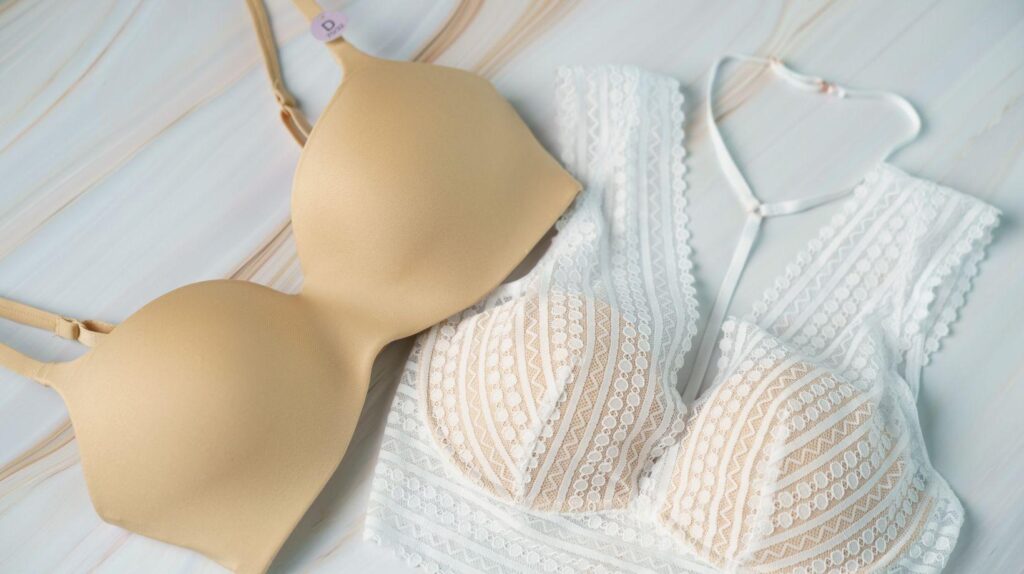
What girls wear sends quiet messages about what's expected of their bodies. Clothing designed for her age and stage lets her move freely and feel like herself. Even something as practical as a teen's first bras can reinforce confidence when they're chosen for comfort and fit rather than padding, push-up shapes, or adult styling.
Let her be part of those choices. Picking colors and styles herself helps her feel ownership over her body instead of feeling that it's being managed by someone else.
Keep her moving for joy
Sports, dance, hiking, or simply biking around the neighborhood help girls experience their bodies as capable and strong. Focus on fun and effort rather than weight or appearance.
Curate the media together
You can't block every image, but you can talk about them. Ask questions like "Do you think that photo was edited?" or "Why do you think ads always show the same kind of body?" Media literacy helps her filter what she sees.
Follow diverse role models together: athletes, scientists, artists, and creators who are valued for what they do.
Listen more than you fix
When she says she hates something about her body, resist the urge to immediately reassure her or dismiss the feeling. Ask what made her feel that way. Understanding the source helps you respond in a way that actually reaches her.
Celebrate her whole self
Notice her humor, her kindness, her curiosity, and her persistence. When the praise she hears most is about who she is, her sense of worth rests on something more stable than how she looks.
The long game
Body confidence isn't built in a single conversation. It grows through thousands of small moments: a comment you didn't make, a question you welcomed, a choice you let her own. Those moments shape the voice she'll hear in her own head for years to come.