
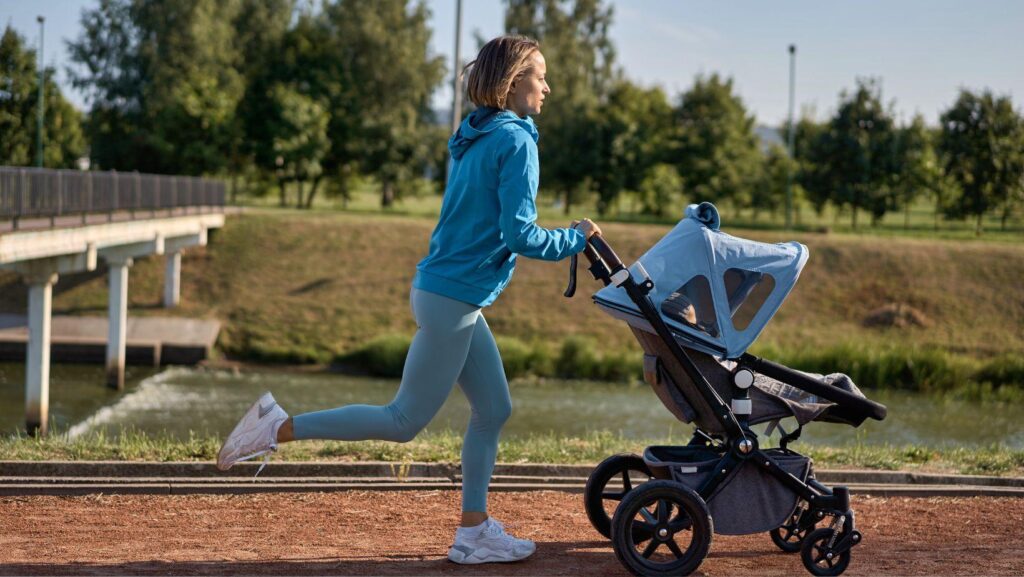
A collapsible stroller earns its place when it folds fast and still rides well once it’s open. That combination matters more than any single spec sheet number. Before you compare models, look at your own week, from how you travel to how much storage space you have at home. The right fold mechanism follows from those answers, not the other way around.
Why the Fold Matters More Than You Think
Most parents fold and unfold their stroller several times a day. Think of getting into the car or storing the stroller in a narrow hallway. If the fold takes two hands and a lot of patience, you feel it every single time.
A good fold should work with one hand while you hold your child with the other. That is not a luxury. It is the difference between a smooth school run and a daily struggle at the trunk of your car. When you test a collapsible stroller in a store, fold it yourself at least three times. If the motion feels awkward on the third try, it will still feel awkward after a month.
What to Check
The fold is only part of the picture. A stroller also has to ride well, because your child spends hours in it. These points are worth checking in person:
- Folded size. Measure your trunk and your storage spot at home first, then compare.
- Weight. Lift the folded stroller with one arm, the way you would on stairs or at a curb.
- Self-standing fold. A stroller that stands upright when folded keeps the fabric off dirty floors.
- Ride quality. Push it with one hand over a rough surface. If it pulls to one side, keep looking.
- Seat comfort. Check the recline positions and the canopy coverage for your child.
Always follow the manufacturer’s age and weight limits. Those limits exist so the seat supports your child properly at every stage, and ignoring them puts strain on both the stroller and your child’s posture.
Flying and Long Trips Change the Equation
Travel raises the bar. At home, a slightly bulky fold is an inconvenience. At an airport, it slows you down at security and at the gate, while you are also managing a child and a carry-on.
For trips, a light stroller for travel makes those moments easier, because a lower weight and a compact fold are exactly what you need when you carry everything yourself. A compact fold may also meet many airline cabin baggage requirements, which means the stroller can stay with you instead of going into the hold. That is worth confirming, though, because policies differ by airline and sometimes by aircraft, so check with your carrier before you book. If the stroller does need to be checked at the gate, a protective bag helps prevent scratches during handling.
One Stroller or Two?
Some families use one stroller for everything. Others keep a full-size stroller for daily walks and add a lighter one for trips. Neither choice is wrong. It depends on how often you travel and how much you want to spend.
If you fly or take the train more than a few times a year, a second, lighter stroller usually pays for itself in saved hassle. If travel is rare, one well-chosen collapsible model can cover both roles, as long as its folded size fits your car and your home.
Test Before You Decide
Specs tell you part of the story, but your hands tell you the rest. Visit a store and fold the stroller yourself. Lift it with one arm and push it around. Bring the measurements of your trunk and hallway. A stroller that fits your spaces and folds without a fight is one you will actually enjoy using, every day and on every trip.